

Written By: Michal Szlas
Michal Szlas is the founder of OTTY Sleep and a lifelong sports enthusiast who understands the critical role quality sleep plays in recovery and performance. With his extensive background in sports and passion for optimizing sleep, Michal is a trusted authority dedicated to helping you achieve better, more restorative sleep every night.
Roughly a third of UK adults experience low back pain in any given year — with lifetime estimates running as high as 80%. Not all of it comes from the bed, of course. But you spend around a third of your life on your mattress, and when that surface stops holding your spine in a neutral position, it quietly works against you for seven or eight hours every single night.
The good news is that mattress-related back pain is one of the more fixable kinds. This guide walks you through how to tell whether your mattress is the culprit, a quick test you can do yourself tonight, how to spot when the pain is pointing at something other than your bed, and how to choose a mattress that actually supports your back.
Can a mattress really cause back pain?
Yes. A worn-out or poorly matched mattress can both trigger new back pain and make an existing problem worse.
Your spine has a natural S-shaped curve, and it's happiest when that curve is supported and kept in line from your neck to your hips. A good mattress does two jobs at once: it supports the heavier parts of your body (your hips and lower back) so they don't sink out of alignment, and it relieves pressure at your shoulders and hips so those points aren't taking all the load. Get the balance right and your muscles switch off and recover overnight. Get it wrong and your spine spends the night subtly twisted or sagging, so your muscles keep working to compensate.
In a landmark randomised controlled trial published in The Lancet, 313 people with chronic lower back pain were given either a firm or a medium-firm mattress. The medium-firm group saw significantly better results for pain in bed, pain on rising and daytime disability.
The signs your mattress is behind your back pain
No single sign is proof on its own, but the more of these that ring true, the stronger the case against your mattress.
You wake up stiff or sore — and it eases once you're up
This is the classic tell. If you wake up aching but loosen up within about 15 to 30 minutes of moving around, that pattern points firmly at your sleep surface. Pain that builds through the day, on the other hand, is more likely to be posture or activity-related.
You sleep better away from home
If you wake up refreshed in a hotel, at a friend's or even on the sofa, but sore in your own bed, that's a strong signal. It's one of the few ways to "test" your mattress against a different surface, and if a strange bed consistently treats your back better, the problem is at home.
You can't get comfortable and toss and turn
When you first lie down you should be able to settle fairly quickly. Constant repositioning, or never quite finding a comfortable spot, usually means the mattress isn't relieving pressure or supporting you where you need it.
You feel like you're sinking into the middle
If getting in and out of bed feels like climbing out of a hollow, or you roll towards the centre, your mattress is likely too soft or has lost its support. Your midsection is the heaviest part of your body, so it sinks first, dragging your spine out of line.
You feel like you're lying on a board
The opposite problem. A mattress that's too firm won't let your shoulders and hips settle in, leaving pressure points and often a visible gap under the small of your back. Waking with sore hips and shoulders is a common giveaway.
You roll towards your partner
If you keep ending up back-to-back in the middle of the bed, the mattress is sagging where you both sleep and struggling to support two people. That leaves one or both of you sleeping in a compromised, twisted position.
You feel like you might roll off the edge
Poor edge support means the sides collapse when you sit or sleep near them, shrinking your usable sleep space and, again, pushing you into awkward positions.
You can see or feel the wear
Visible dips, lumps, permanent body impressions, or springs you can feel through the surface are unambiguous. Sagging tends to show up first in the hip and shoulder areas where your weight concentrates.
Your mattress is 7+ years old
Most mattresses need replacing every seven to ten years. Support materials compress and break down gradually, so the decline is easy to miss until you compare it to a newer bed. Our guide on how often you should change your mattress goes into the full list of tell-tale signs.
You wake up more tired than when you went to bed
Pain and poor support fragment your sleep even when you don't fully wake. If you're consistently unrefreshed and achy, your mattress may be interrupting the deep, restorative sleep your body uses to recover.
The 30-second sag test you can do tonight
Signs are one thing; here's how to actually check.
- Strip the bed back to the bare mattress, then lay a broom handle, a spirit level or any long straight edge across the surface from one side to the other.
- Look at the gap underneath it in the middle, where you sleep.
- If you can see a dip of more than around 3 to 4 cm (roughly an inch and a half) with nobody lying on it, the comfort layer has structurally given up and no amount of firmness rating will fix it.
- A slight, even dip is normal; a clear hollow is not.
Too soft or too firm? How to tell which way to go
If your mattress is the problem, the fix depends on which direction it's failing. Working this out saves you from swapping one wrong mattress for another.
Signs it's too soft: you sink into a "hammock" with your midsection lowest; you struggle to change position because you feel stuck; you find it hard to get in and out of bed; lower back pain is worse after nights spent on your back. Heavier sleepers hit this problem sooner, because more weight compresses the materials further.
Signs it's too firm: you feel like you're lying on the mattress rather than in it; you get pressure pain at the hips and shoulders (especially as a side sleeper); there's a visible gap between your lower back and the surface when you lie on your back; you toss and turn hunting for a comfortable spot.
Your body weight matters here too. As a rough guide, lighter sleepers (under around 11 stone) often need a slightly softer feel to get any contouring at all, average-weight sleepers suit medium-firm, and heavier sleepers (15 stone and above) usually need a firmer, more supportive build to avoid sinking.
When it's probably not your mattress
Your mattress is a common cause of back pain, but it isn't the only one, and a few patterns suggest something else is going on. It's worth being honest with yourself about these, because a new mattress won't fix them.
Your mattress is less likely to be the cause if:
- Your pain came on suddenly with no change to your bed. Abrupt back pain is more often down to a strain, an injury, overexertion or stress.
- Your pain is worst during the day — while sitting, driving or standing — and relatively fine first thing. That points towards daytime posture, ergonomics or core strength.
- Your back improves on a new, supportive mattress but never fully settles, which suggests a contributing factor beyond the bed.
And please treat these as reasons to see a GP rather than shop for a mattress: back pain alongside a fever, unexplained weight loss, numbness or tingling in your legs, pain that regularly wakes you from sleep, or any change to bladder or bowel control. These are not mattress problems, and they deserve prompt medical attention. If your pain is severe, persistent, or you're at all worried, speak to your GP, a physiotherapist or NHS 111 for advice.
Don't overlook your bed base
Here's something most guides skip. Your mattress can only perform as well as what it sits on, and a failing base will mimic a failing mattress.
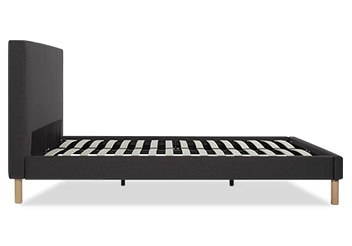
Check your slats: if they're bowed, cracked or spaced more than about 7 cm (3 inches) apart, the mattress loses support between them and starts to dip. If you have a divan or box-spring base, press down across it and listen — soft spots, give or creaking mean the foundation is worn. Replacing slats or a base is far cheaper than replacing a mattress, so it's always worth ruling out first. A quality, sturdy bed frame is part of the support system, not just furniture.
How your sleeping position changes what you need
The "right" mattress isn't universal, it depends on how you lie.
Side sleepers need enough give at the shoulders and hips to let those points settle, while still supporting the waist so the spine doesn't bow sideways. Medium to medium-firm usually works best. Tucking a pillow between your knees keeps your hips and pelvis aligned and takes strain off your lower back.
Back sleepers do well on medium-firm support that holds the lumbar curve without letting the midsection sag. A pillow under your knees helps your spine keep its natural S-shape.
Front sleepers have the toughest position for the back, because the stomach sinks and the spine arches. If you can't retrain yourself onto your side or back, a firmer mattress limits that sinking, and a thin pillow (or none) under your head plus a flat pillow under your pelvis reduces the strain.
Mattresses for front sleepers.


The best OTTY mattresses for back pain
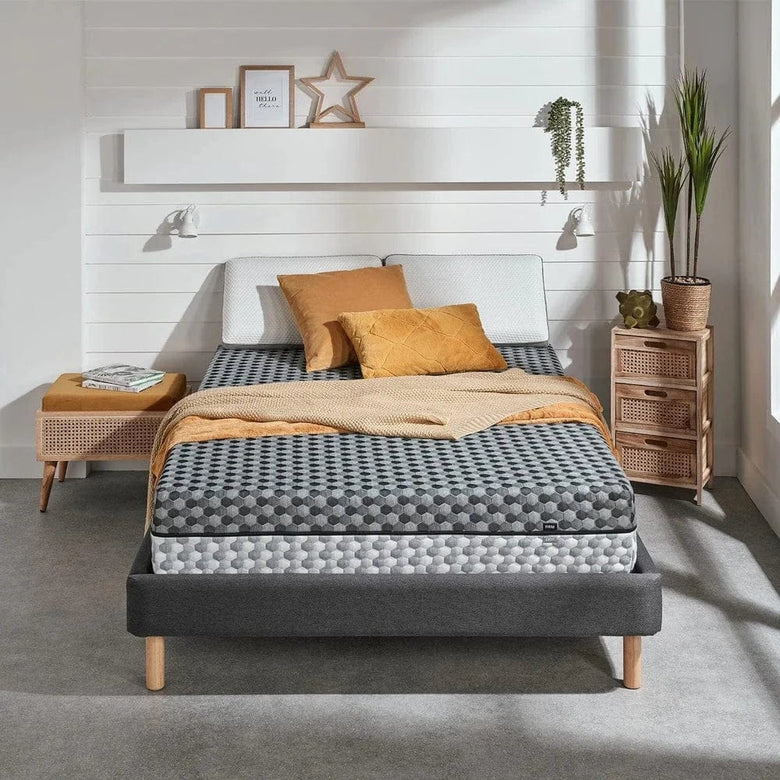
OTTY Original Hybrid Mattress
Our flagship, with long encapsulated springs that provide continuous support right across the mattress for spot-on spinal alignment. A medium-firm (7/10) feel that suits the widest range of sleepers.
OTTY Aura Hybrid Mattress
A seriously comfortable, supportive hybrid at our most accessible price — a great first step away from an old, sagging mattress without stretching the budget.
OTTY Pure Hybrid Bamboo Mattress with Charcoal
Our most popular model, engineered to sleep cool with bamboo and charcoal-infused foam, up to 2,000 pocket springs and an airflow system — supportive alignment for those who tend to overheat.
OTTY Pure+ Hybrid 4000 Pocket Sprung Mattress
Our most luxurious build, with up to 4,000 pocket springs for a plusher feel that still doesn't compromise on support. A good choice if you want a softer surface without losing spinal alignment.
OTTY Extra Firm Hybrid Mattress
Our most supportive mattress, purpose-built for heavier sleepers (15 stone and above) or anyone who needs maximum support to keep the spine properly aligned.
Not sure where to start? Take a look at our full range of hybrid mattresses or get in touch — we're happy to point you towards the right fit for your weight, position and pain.
Beyond the mattress: small changes that help your back
A mattress does a lot, but it works best alongside a few other things.
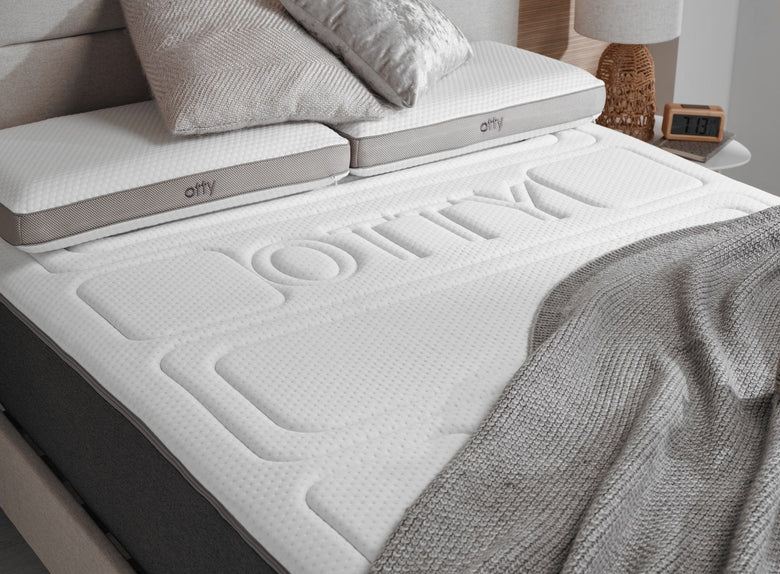
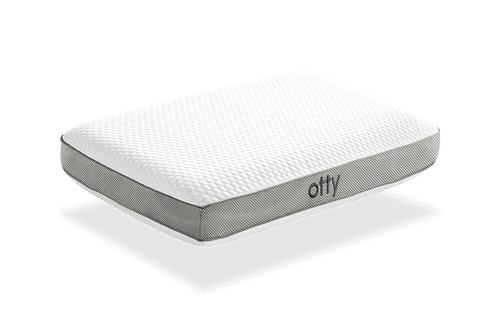
Your pillow. Your mattress controls your spine; your pillow controls your neck. If you've sorted the mattress but still wake stiff, the wrong pillow height may be the missing piece. Side sleepers need firmer, higher support; back sleepers medium; front sleepers soft and flat. Our adjustable pillow lets you tune the height to your position.
A topper — as an interim fix. If your mattress is structurally sound but a touch too firm, a mattress topper can add pressure relief at the hips and shoulders at a fraction of the cost of replacing. It won't rescue a mattress that's already sagging or lumpy, though — no topper can restore support that's gone.
Daytime movement. Gentle mobility work and a short stretch morning and night keep the spine flexible, and building core strength gives your back better support around the clock. Staying active is one of the most consistently recommended things you can do for back health.
Sleep hygiene. Poor sleep worsens pain, and pain worsens sleep — it's a loop worth breaking. A cool, dark room and a consistent bedtime help you get the deep sleep your body uses to recover.
When to see a professional
If you've upgraded your mattress and pillow, adjusted your position and given it a few weeks, but your back pain persists — or if it's severe, came on suddenly, or comes with any of the red-flag symptoms above — see your GP or a physiotherapist. A mattress can remove a major contributing factor, but it isn't a treatment for an underlying medical condition, and persistent pain deserves a proper assessment.
Frequently asked questions
How long before a new mattress helps my back pain?
Most people notice a difference within two to four weeks as their body adjusts to proper support. If there's no improvement at all after a month on an appropriate firmness, reassess.
Is a firm or medium-firm mattress better for back pain?
For most people, medium-firm — it balances support and pressure relief, and it's the most evidence-supported choice. Heavier sleepers often need firmer support; lighter sleepers may prefer something a touch softer.
Can a soft mattress cause back pain?Yes. Too-soft mattresses let your midsection sink, pulling your spine out of alignment all night. It's just as much a cause of back pain as a mattress that's too hard.
Can a mattress topper fix back pain?
It can help if your mattress is structurally sound but slightly too firm. It can't fix a mattress that has already lost its support — in that case, replacement is the answer.
How often should I replace my mattress?
Every seven to ten years as a general rule, though condition matters more than the calendar. If you're seeing sagging, lumps or waking up sore, it may be time regardless of age.
Final thoughts
Your mattress won't cure a bad back, but the wrong one can absolutely cause or worsen it — and the right one removes a problem you'd otherwise fight every night. Run through the signs, do the sag test, work out whether yours is too soft or too firm, and rule out your bed base while you're at it. If the evidence points at your mattress, choose a supportive hybrid in the medium-firm to firm range that matches your weight and sleeping position, give it a fair few weeks to bed in, and pair it with the right pillow.
And if your pain doesn't ease, or any of the red flags apply, see a professional.