

Waking up with a headache isn't always about stress, screen time, or what you drank the night before. Sometimes the culprit is a lot simpler, and a lot closer to home.
Your pillow spends every night supporting your head and neck. If it's the wrong height, the wrong firmness, or just worn out, it can create the kind of muscle tension that travels straight to your head. Not every morning headache is a pillow problem, but if you're waking up with one regularly, it's worth ruling out the most obvious cause first.
Can a pillow really cause headaches?
Yes. The connection is well established. When your pillow doesn't keep your head and neck in a neutral position, the muscles in your neck and upper back have to compensate all night.
That sustained tension can radiate upward and trigger what's known as a tension headache — a dull, pressing pain, often on both sides of the head, that feels like a band tightening around it.
This is different from a migraine, which tends to involve throbbing pain on one side, sensitivity to light and sound, and sometimes nausea.
However, poor sleep caused by an uncomfortable pillow can lower your threshold for migraines if you're prone to them, making them more frequent or more intense.
How does a bad pillow cause neck tension and headaches?
The key issue is spinal alignment. While you sleep, your spine, including your cervical vertebrae (the neck), should maintain roughly the same natural curve it holds when you're standing. A pillow that's too thick pushes your head upward and strains the back of your neck. One that's too flat lets your head drop and puts pressure on the front. Either way, the muscles around your neck and shoulders end up working overtime to compensate, building up tension that can turn into a headache by morning.
The wrong pillow firmness compounds this. A pillow that's too soft allows your head to sink unevenly, putting your neck in an unnatural lateral tilt. A pillow that's too firm creates pressure points against the skull. Neither is doing your neck any favours.
Pillow Headache Check
Answer 5 quick questions to find out whether your pillow could be behind your morning headaches.
Signs your pillow is causing your headaches
Not sure whether your pillow is to blame? These are the most common indicators:
You wake up with a headache that clears during the day. Tension headaches linked to sleep position typically ease within a couple of hours of getting up and moving around.
Your neck or shoulders are stiff in the morning. Stiffness on waking — particularly in the upper trapezius or base of the skull — points to overnight muscle tension.
You toss and turn trying to get comfortable. If you're constantly readjusting your pillow through the night, it's not providing consistent support.
Your pillow has lost its shape. A pillow that's flat, lumpy, or no longer springs back when you fold it in half has lost its structural integrity. It's no longer doing the job it was designed to do.
Your headaches are worse on certain days. If you notice a pattern — better after a nap on the sofa, worse after a full night in bed — the pillow is a prime suspect.
You've had your pillow for more than two years. Most pillows, regardless of fill type, degrade significantly after 18-24 months of regular use. The support isn't there anymore even if it looks fine.
Other reasons you might wake up with a headache
A pillow problem is one of the most fixable causes of morning headaches, but it's not the only one. If you've already replaced your pillow and the headaches continue, it's worth considering:
Dehydration. You lose fluid overnight through breathing and perspiration. Going to bed under-hydrated is a reliable headache trigger. Drinking enough water during the day — and avoiding excess alcohol in the evening — makes a real difference.
Sleep apnoea and snoring. Research has found that around a third of people with obstructive sleep apnoea report morning headaches. The mechanism is reduced oxygen flow during sleep. If your partner tells you that you snore heavily or stop breathing in the night, it's worth talking to your GP.
Teeth grinding (bruxism). Clenching or grinding your jaw during sleep puts significant strain on the temporomandibular joint and can cause tension headaches that feel very similar to neck-related ones. A night guard fitted by a dentist can help.
Too little or too much sleep. Both extremes can trigger headaches. Sleep deprivation is a well-known trigger, but oversleeping — particularly at weekends — can disrupt your normal sleep cycle and produce what's sometimes called a "lie-in headache."
Bedroom air quality. A poorly ventilated bedroom with stale air, or one that's overheated, can contribute to waking headaches. Keeping the room cool and airing it out regularly is a simple fix.
Allergens in old bedding. Pillows accumulate dust mites, skin cells, and mould spores over time. For people with allergies or rhinitis, this can cause nasal inflammation that triggers sinus-type headaches. Washing pillow covers weekly and replacing pillows regularly helps reduce the load.
Choosing the right pillow to prevent headaches
Once you've identified a pillow problem, the fix depends on how you sleep.
Side sleepers need a higher, firmer pillow — one that fills the gap between the ear and the mattress and keeps the spine level. Without enough height, the neck drops sideways and the muscles on one side are permanently contracted.
Back sleepers do best with a medium-height pillow that supports the natural curve of the neck without pushing the chin too far towards the chest. Too much loft is a common mistake here.
Stomach sleepers put the most strain on the neck regardless of pillow choice, because the neck is rotated to one side for hours. If you sleep on your front, a very thin, soft pillow — or no pillow at all — minimises the angle of rotation.
On fill type: memory foam pillows tend to hold their shape well throughout the night and distribute pressure evenly, which is why they're often recommended for people with neck issues. An adjustable pillow — where you can add or remove fill to dial in the height — takes the guesswork out of getting the loft right for your body.
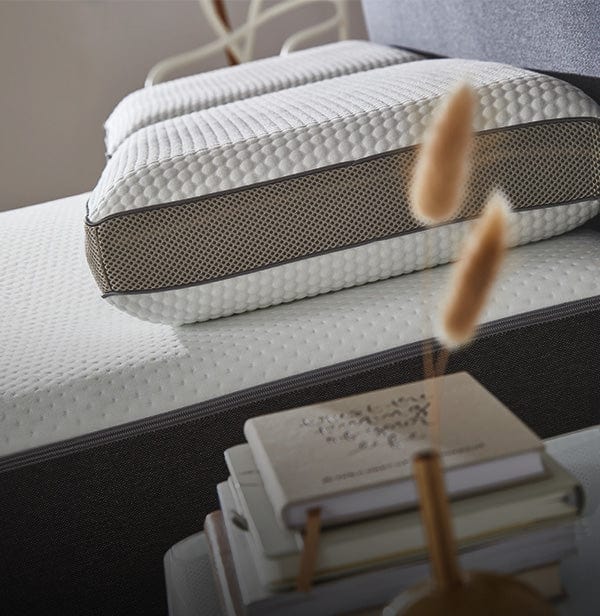
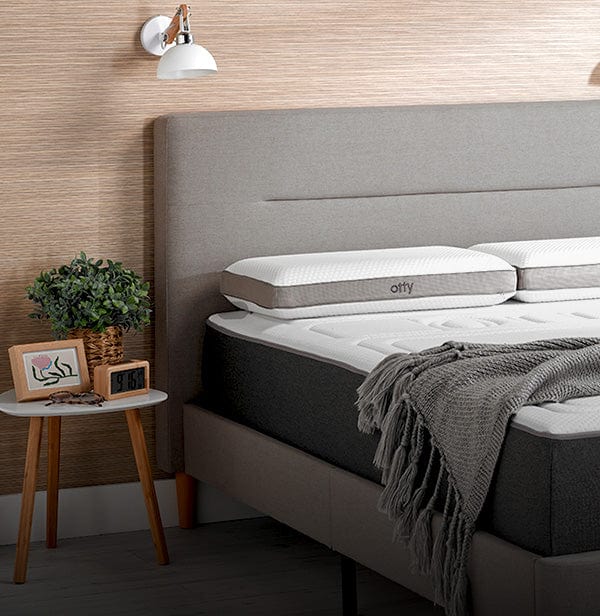
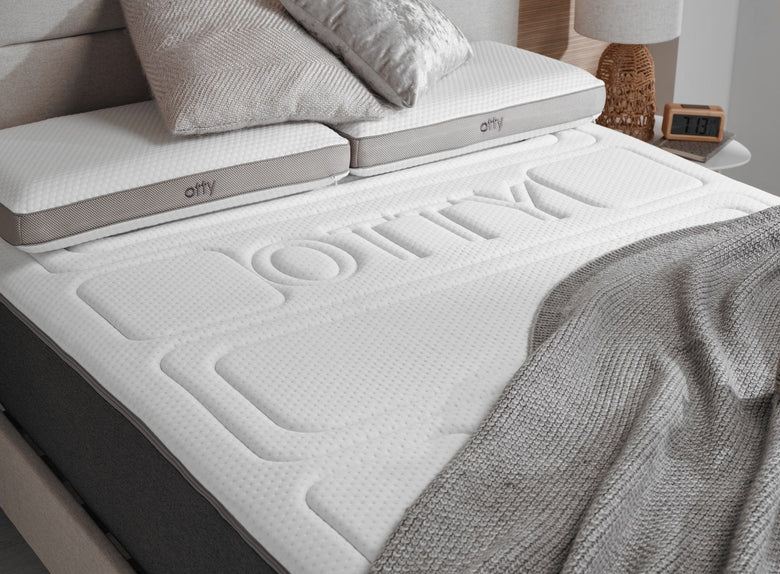
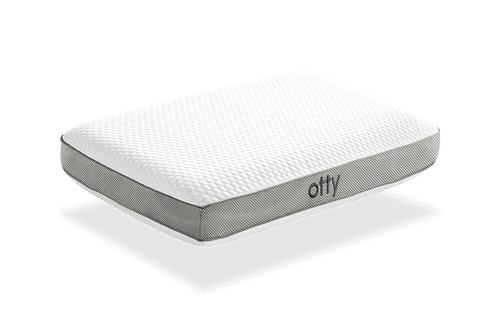
The OTTY Adjustable Pillow is height-adjustable, so you can fine-tune it to your sleep position rather than guessing. The Deluxe Pure Bamboo Pillow uses memory foam with a bamboo cover for temperature regulation — useful if overheating is also affecting your sleep quality.
Summary
Yes, a pillow can cause headaches — specifically tension headaches caused by overnight neck muscle strain due to poor spinal alignment. The most common culprits are a pillow that's too flat, too high, too firm, or simply past its useful life. Other factors like dehydration, allergens, sleep disorders, and teeth grinding can produce very similar symptoms, so it's worth ruling those out too.
The practical checklist: check the age and condition of your pillow, match the height and firmness to your sleep position, keep your bedroom well-ventilated, stay hydrated, and replace your pillow every one to two years. If problems continue, get checked out.
For help choosing the right pillow, see our guide to choosing the right pillow and how often you should replace it.

Written By: Michal Szlas
Michal Szlas is the founder of OTTY Sleep and a lifelong sports enthusiast who understands the critical role quality sleep plays in recovery and performance. With his extensive background in sports and passion for optimizing sleep, Michal is a trusted authority dedicated to helping you achieve better, more restorative sleep every night.